St Martin’s Fair

16th  Novembre :  

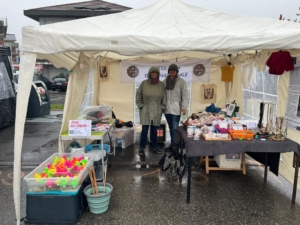
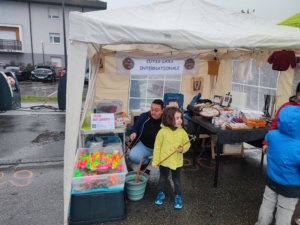
The traditional St Martin’s Fair was cold and wet, but it did not prevent us from running the stand for Cutis Laxa Internationale as long as we could for children to come and play « fishing for ducks» before selecting one of the proposed gifts.  It was a great occasion to meet with Roxanne and her parents again.

Three new national plans for rare diseases in the world :

They all are in line with the recent adoption of the World Health Assembly (WHA)’s Resolution on Rare Diseases, which recognises the global challenges faced by PLWRD. (© Orphanews 2025.10.06)

Malaysia

This is the nation’s first ever strategy for rare diseases. It aims to address critical gaps and strengthen the delivery of comprehensive healthcare solutions for PLWRD in Malaysia. The policy defines a disease as rare if it affects fewer than 1 in 4,000 people, and identifies 9 key pillars of action to improve rare disease care, diagnosis and awareness

Ireland

The Irish Department of Health unveiled their National Rare Disease Strategy 2025-2030. This strategy builds on the foundation of the previous National Rare Diseases Plan for Ireland 2014-2018, and addresses issues encountered by PLWRD throughout all stages of life. The result of multi-stakeholder collaboration between patients, clinicians, researchers, and government representatives, the strategy puts forward 11 recommendations to reinforce rare disease care and awareness in Ireland.

Luxembourg

The Ministry of Health adopted the country’s second national plan for rare diseases, the “Plan National Maladies Rares Luxembourg” 2025-2029 (PNMRL). This plan represents a continuation of the first national plan, which was in place from 2018 to 2023. It aims to promote a reinforced, coordinated healthcare system for PLWRD in Luxembourg. It takes a holistic, person-centred approach to the challenges facing the rare disease community across five thematic areas.

Can cognitive behavioural group therapy help people living with a rare disease?

People living with a rare disease (PLWRD) often experience significant psychological burden, that results from a number of factors including physical pain, reduced income and increased medical expenses, and reduced social interactions. In addition, chronic physical conditions, as in most rare diseases, often occur alongside depression which can further exacerbate other mental health effects of the disease itself. In order to address this issue, a study was recently published in Intractable & Rare Diseases Research that investigates the effects of a mindfulness-based cognitive behavioural group therapy program for patients with a rare disease and deep depression.

The program described in the article consisted of three monthly sessions, each lasting 2 hours. Overseen by a clinical psychologist, it was designed to reduce psychological stress and improve quality of life in People Living With a Rare Disorder. (©Orphanews international 2025.10.06)

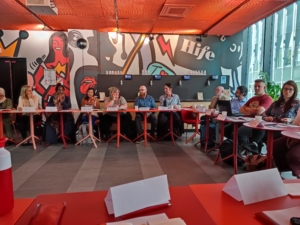
FIMARAD Annual Meeting

3rd October :

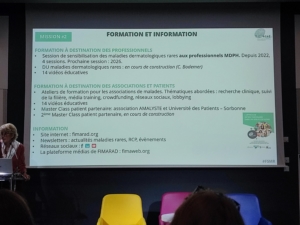
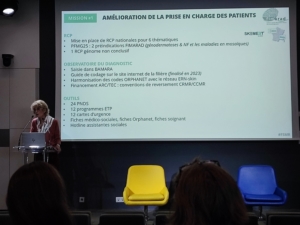
The annual meeting of FIMARAD (French Network for Rare Skin Disorders) took stock about projects and advances in the network regarding diagnosis, therapeutics and follow-up.  The forthcoming publication of an article written together by patients and health professionals on the diagnostic odyssey is of special interest to health authorities.

We were also celebrating the network’s 10th anniversary,  an important step marked by Pr Christine Bodemer stepping back and  handing over the coordination to Pr Smaïl Hadj-Rabia.

Globalskin Europe and EADV in Paris

16th September : GLOBALSKIN

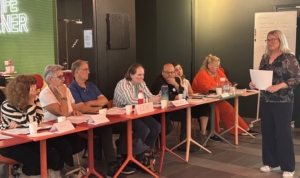
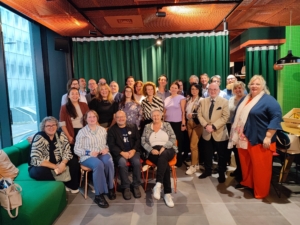
Globalskin Europe members met in Paris about Advocacy Strategies, working on opportunities and challenges when interacting with national and/or European policy makers.

A great opportunity to meet with colleague Patient Organisation Leaders

17th-20th September : EADV

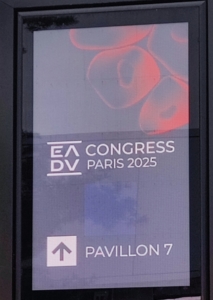
The European Academy of Dermatology-Venerology (EADV) held its annual conference in Paris.

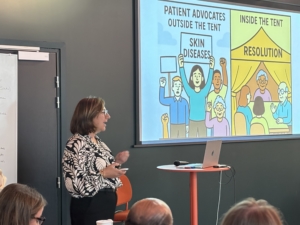
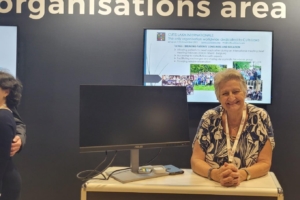
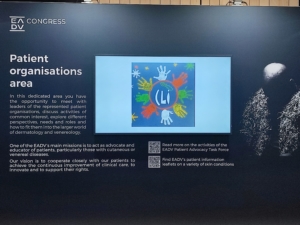
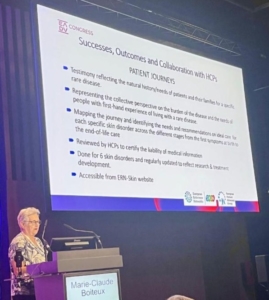
Besides the possibility to have a booth increase the visibility of Cutis Laxa, Marie-Claude Boiteux spoke about the successes and projects led by the Patient Representatives (ePAGS) during the session dedicated to the work done in ERN-Skin.

Another Day in Bergame

13th September 

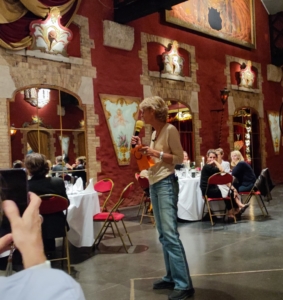
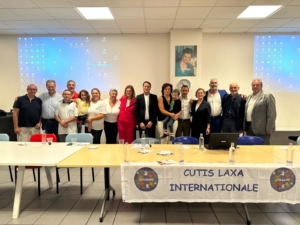
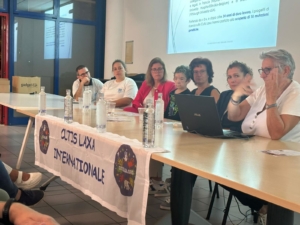
We traveled back to Bergame for an evening of information and exchanges about what it is like to live with Cutis Laxa.

Roxanne and her parents were with us for this second Italian event with partners and authorities who had organised « Semplicemente Amici ».

Exchanges and questions were very interesting and increased understanding of what Cutis Laxa is and how it impacts patients’ lives.


Welcome

New members

Rebecca, Sami, Robert, Anna, Zoé, Mercédes, Sarah, Emily, Elena, Tawn, Ember, Mariam, Giulano, Quentin,

our Big Cutis Laxa Family is here to help and support you and to answer your questions.

Counting you, we are now 567 patients worlwide, suffering from Cutis Laxa.

In the Media

11th March :

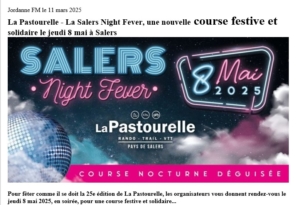
Local radio “Jordanne FM” interview with Philippe Barrière, Chair of La Pastourelle, announcing the Salers Night Fever

Read to the interview (in French)

30th March:

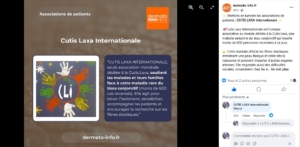
Facebook Page «Dermato Info»: presenting CLI

03rd May:

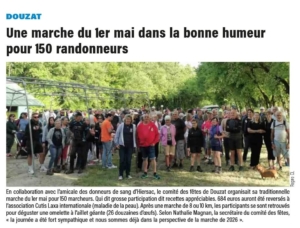
Charente Libre: Walking for CLI on 1st of May

30 Mai :

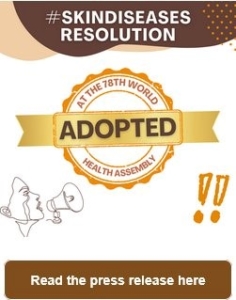
WHA Resolutions are voted

Read the press release (in English)

May 2025:

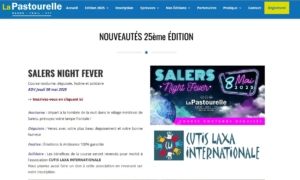
La Pastourelle: Brochure and Facebook page announcing the « Night Fever in Salers » to the benefit of CLI

July 2025:

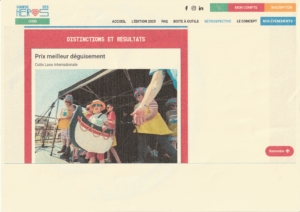
Taking stock of the « Heroes Run » : CLI won the prize for the best costumes.

They left this world

Alas ! more deaths plunged us in mourning:

Nathan, Maui, Tony and Tasha.

Adults or children, new members or those we’ve known for years, we always hear with great sadness that one of our members has left this world. They meet all those who have already left. They remain in our hearts and thoughts forever. May they Rest In Peace.


Pregnancy and Family Planning in Rare Disorders

Orphanet Journal of  Rare Diseases published the results of the survey for healthcare professionals « Pregnancy and Family Planning in Rare Diseases”

(read the publication)

 Written by the European Reference Networks (ERNs) transversal working group that brings together patient representatives (EPAGs) (of which Marie-Claude Boiteux) and healthcare professionals (HCP) from 20 ERNs . After identifying 7 transversal domains to be explored in the survey (Fertility preservation, Pre-conceptional counseling, Family Planning counseling, Pre-implantation diagnosis, Prenatal diagnosis, Pregnancy monitoring, Post pregnancy monitoring/ lactation monitoring/counseling/newborn management), the group established closed and open-ended questions for each domain. These questions explored the level of importance, the activities performed by the center, the clinical challenges, the good practice and the educational activities related to the selected topics.

HCP, from 24 different countries answered the survey.

“Pre-conceptional counselling” and “pregnancy monitoring” were mentioned as important/very important at 83.3% and 75.6%, respectively. And « Family Planning Counselling » was considered very important/important at 71,6%.

The conclusions of this survey are pointing unmet needs for HCPs, including the need to improve communication between different HCPs, the lack of predefined organizational pathways, the lack of availability of expert HCPs for some pregnancy-related issues and the need to streamline the care provided among different European countries.

In addition, the survey underlined the need to improve the educational activities provided to ra

re disease patients.

Overall, the results pointed out the need to educate both physicians and patients on the basis of the emerging unmet needs. Online resources can be an excellent educational tool, they may help in disseminating and standardizing educational activities in order to homogenize the information for HCPs and patients.

Therefore, initiatives in this direction by scientific societies, ERNs and patient associations should be promoted and encouraged

A second questionnaire had been sent to patients. The answers are being analysed and should be soon published. It will then be possible to compare HCPs’ and patients’ views.